
Todas las Personas
On harmony, and a neighborhood's portrait of itself

Tranquilaaaa.
A kindergartner sang the word stretched all the way out, the last of a long list of everything the people in this neighborhood are: curiosa, valiente, generosa, ambiciosa, talentosa, tranquila. She drew the final vowel out like she didn’t want to let the song end. It was her recording session, just her and Julian and the mic, and she made it sound as chill as it means.
Of all the words in this song, I didn’t know tranquila would be the one that stuck in my head. The word came back as an answer on a family questionnaire, one family’s response when we asked what positive trait describes their child. The word traveled from that parent, into the lyrics of the school song, and then out of the mouth of a kindergartner singing it at the top of her lungs. The best parts of this work are the parts we could not have planned.


We made this project, Todas las Personas, with P.S. 319, a tight-knit school in the Williamsburg neighborhood with a long history of Spanish-speaking families and a dual language Spanish kindergarten. Many of the young artists have parents who once sat in these same rooms as students, and some of the teachers have been here for decades. We went in with a structure and a question and a concept. The specific content came from the families, the young artists, and the teachers. The word tranquila. The shapes. The voices. The barrio itself.
The Considers Community Concept: Our Openness to Variety Brings Harmony.
Nuestra receptividad a la variedad es el puente hacia la armonía.
Harmony. I want to slow down on that word, because I often hear people use it to mean everyone getting along, everyone agreeing, all the edges sanded off until a group sounds like one smooth thing. Harmony is the opposite of that. In music, harmony is different notes that sound good together, two or three or ten of them at once. They don’t meld into one note, and they don’t clash. The reason the chord catches you in the chest is that you are hearing all of the notes at the same time, each one itself, leaning on the others. Pull any single note out and the whole thing changes. The young artists made this kind of harmony in color, in shape, and in voice.
We started by asking the families questions. What language do you speak at home? What is a term of endearment your family uses? What is a trait you admire in your child? How long has your family called this neighborhood home, whether one month or many years? The answers came back in Spanish, English, Russian, and Patois. Those answers were the material, the actual material, the words and the data the whole project would be made from. This is the part I find hardest to explain to people who haven’t seen it work: the content was never ours to invent. It was already in the community before we arrived, and our job is to hand it back, made visible, to the people who gave it to us.1


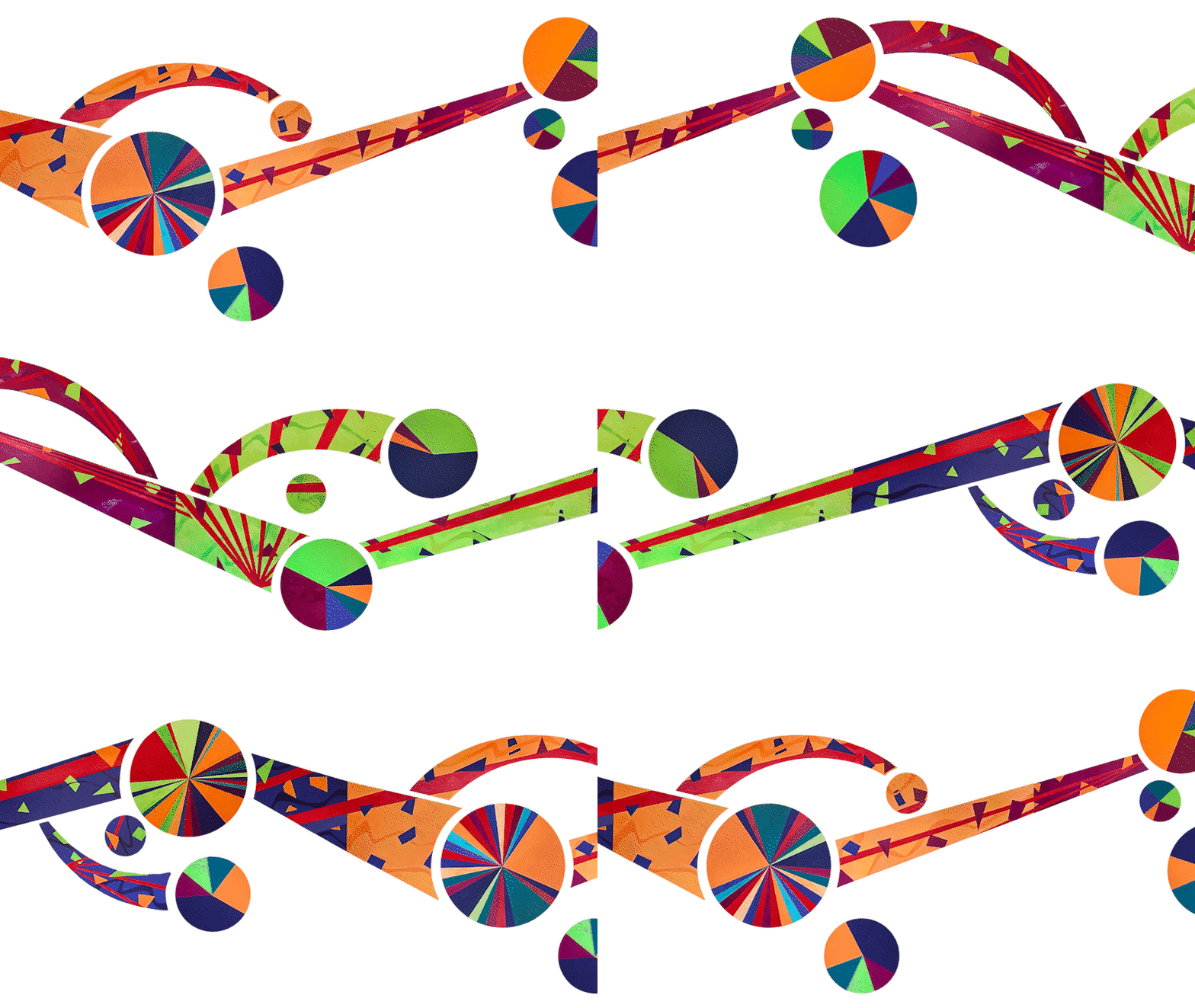
The answers became color wheel pie charts, painted right across the hallways, every wedge a real response from a real family. Then the young artists added something of their own. They went looking around their school and found shapes everywhere: the rectangles of the bricks, the circle of the basketball hoop out in the courtyard, the triangles of the rooftops above the playground. Five- and six-year-olds were suddenly spotting geometry in a building they walked past every single day without a second glance. The art started from the actual ground under their feet, the everyday shapes they found in their own school.2
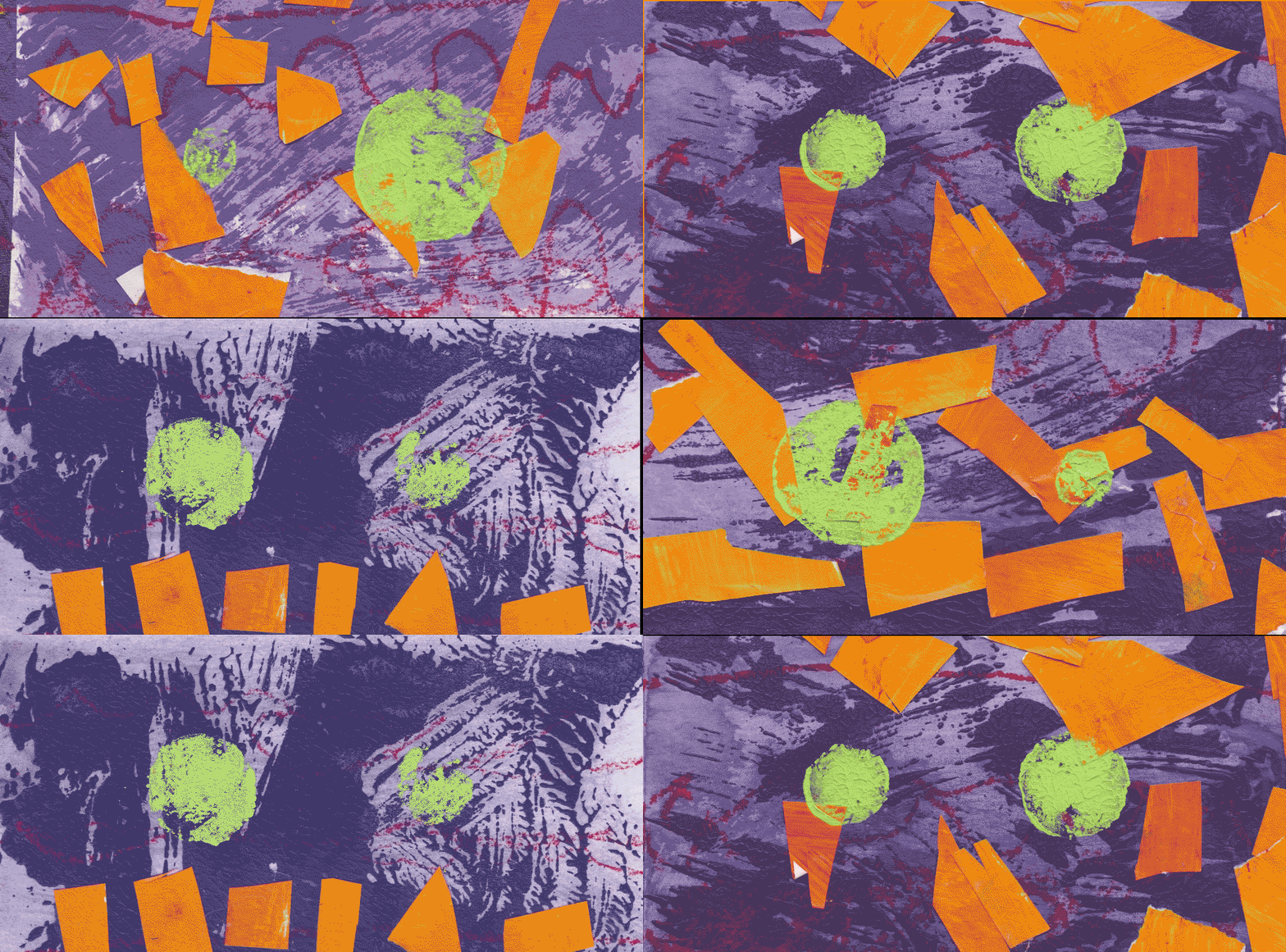
Each young artist cut their own shapes, no two alike, and those cut shapes did double work. Projected large, the cut shapes were traced onto the mural alongside the pie charts. And on a smaller scale, the same shapes went onto each young artist’s own relief print, one color on paper, theirs to take home. The individual and the collective, the same material at two sizes. Set all the prints side by side, and the harmony is what shows.
Pulling a print is a small act of faith, and there’s a real thrill in it. You cut, you ink, you press, you peel the paper back, and only then do you find out what you made. Watching a whole table of kindergartners gasp at what their own hands just did, genuinely surprised, is one of the real joys of this work. Moving forward into the not-knowing is the openness. You make your choices, you stay open to what they turn into, and what comes out is richer than anything you could have controlled.


The teachers were part of the making the whole way through. They sang along, they pulled prints right beside the young artists, and in professional development they painted color wheels of their own, the same family of shapes that runs across the mural. They teach math, ELA, social studies, and science. Taking on learning a printmaking process well enough to later lead young artists in it is a real vulnerability and a real generosity, and they brought both. Like a lot of public schools, P.S. 319 has no standalone art class, so these hardworking teachers are always seeking the cross-curricular moments. They shared their core curriculum vocabulary with us, and we built that vocabulary back into the printmaking lesson plans, with social-emotional connections folded in, so now the teachers have printmaking lessons with their own curriculum already built in, a tool to keep using for years. The geometry of the shapes, the science of two colors becoming a third on the brush, all place-based, all from the room these young artists are actually in.
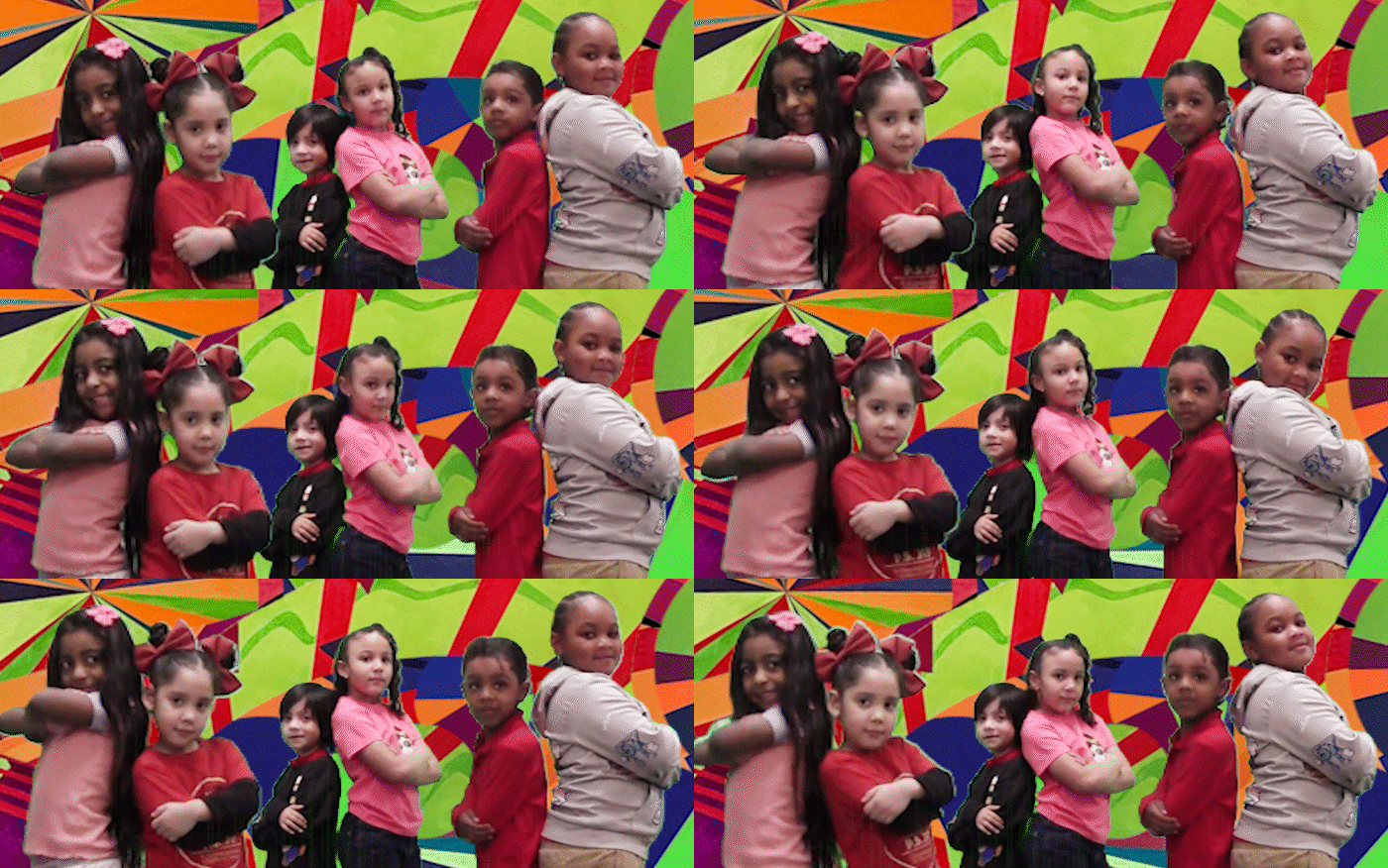
Then there was the song. The chorus came first, learned all together during studio time, sung out loud over the cutting and the printing and the painting. Later studio sessions focused on the verses. The young artists sang into the microphones, together and then one at a time, learning to come in on cue. We filmed young artists on a green screen, and behind them we layered in their mural, their relief prints, and footage of the real neighborhood, so on screen they sang with their own work and their own streets all around them. The multilingual learners among the young artists, strongest in Spanish, led the way into the bilingual verses.3 The song moved between Spanish and English in the same breath, the way these kids do:
all the many people, Todas las personas each a little different, cada una un poco distinta put us together, ponlas juntas we shape the bigger picture, y forman la imagen completa
The verses came from what the families told us. They were about the barrio, about who is here:
Algunos crecimos en este barrio Y nuestros padres y abuelos también Algunos somos nuevos aquí y este es nuestro barrio… nuestro barrio extraordinario
Translation: Some of us grew up in this neighborhood, our parents and grandparents too. Some of us are new here. And this is our neighborhood, our extraordinary neighborhood.
The family that has been here half a century and the family that arrived this year are in the same song, in the same breath.
No sería igual sin las muchas personas.
Translation: It wouldn’t be the same without the many people.


The young artists are singing where they live. The track is out now on Spotify and Bandcamp, the kind of song you can already imagine ringing down the block all summer.
What strikes me, looking back, is how little of the content was ours to decide. We chose the artist reference because her work builds bold images out of simple shapes, arranged and repeated, exactly the move the young artists would make with their plates and prints. We chose printmaking for the repetition, the same shape pulled again and again. We chose the concept. Everything else came in answer to the invitation: the traits from the families, the shapes from a building the young artists noticed on their own, the languages from their homes, the word tranquila from a parent. We set the conditions, and what arrived was better than anything we could have written ourselves.4
This portrait - the mural, the song, the prints, the video - is what the neighborhood looked and sounded like when it made a portrait of itself. Many hands made this portrait: the young artists, their families, the teachers, and the school liaisons at P.S. 319.5 Even on our side with The Painted Cloud it took a team: lead teaching artists, lettering, translation, installation, mixing and mastering, and video editing.6 A variety of people, every one of them distinct, making one picture together. It wouldn’t have been the same, wouldn’t have been anything at all, without every particular one of them.
And the work is a record of this moment. The people here this year, the languages spoken in these homes now, the families who arrived last month and the ones who go back generations, all of it kept in a mural and a song the school and the families can return to again and again. The neighborhood will keep changing. This is what the neighborhood was in 2026, the year the young artists made their portrait of it.
While Julian finalized the production and arrangement, this song has been on repeat in my house. Tranquilaaaa, a five-year-old at a microphone, drawing the word out as far as it will go, one voice in the long list, fully herself, part of the whole. Our openness to variety brings harmony.
Nuestra receptividad a la variedad es el puente hacia la armonía.
Made in partnership with P.S. 319 in Williamsburg, Brooklyn, with the support of the New York City Public Schools Arts for Diverse Learners grant.
Luis C. Moll et al., “Funds of Knowledge for Teaching,” Theory Into Practice 31, no. 2 (1992).
David Sobel, Place-Based Education: Connecting Classrooms and Communities (Great Barrington, MA: Orion Society, 2004).
Ofelia García and Li Wei, Translanguaging: Language, Bilingualism and Education (Basingstoke: Palgrave Macmillan, 2014); Django Paris, “Culturally Sustaining Pedagogy,” Educational Researcher 41, no. 3 (2012).
P.S. 319 school liaisons Christina Clark and Ashley Ramos, with the kindergarten and 1st grade classroom teachers.
The Painted Cloud team on this project: lead teaching artists Julian Bozeman and Sarah Conarro; Laura Rivera Ayala on the translation; Margot Steadman on the lettering and video editing; Hug Vilamala on the installation; Sam O.B. on mixing and mastering; and the High School of Art and Design student video editors Ramón Steadman, Frank Falco, Iris Feldman, Sadie Dexheimer, and Maddie Brienza.