What Isn't There
On observation, negative space, and what can be noticed when slowing down in a familiar place

They aren’t photographing the trees.
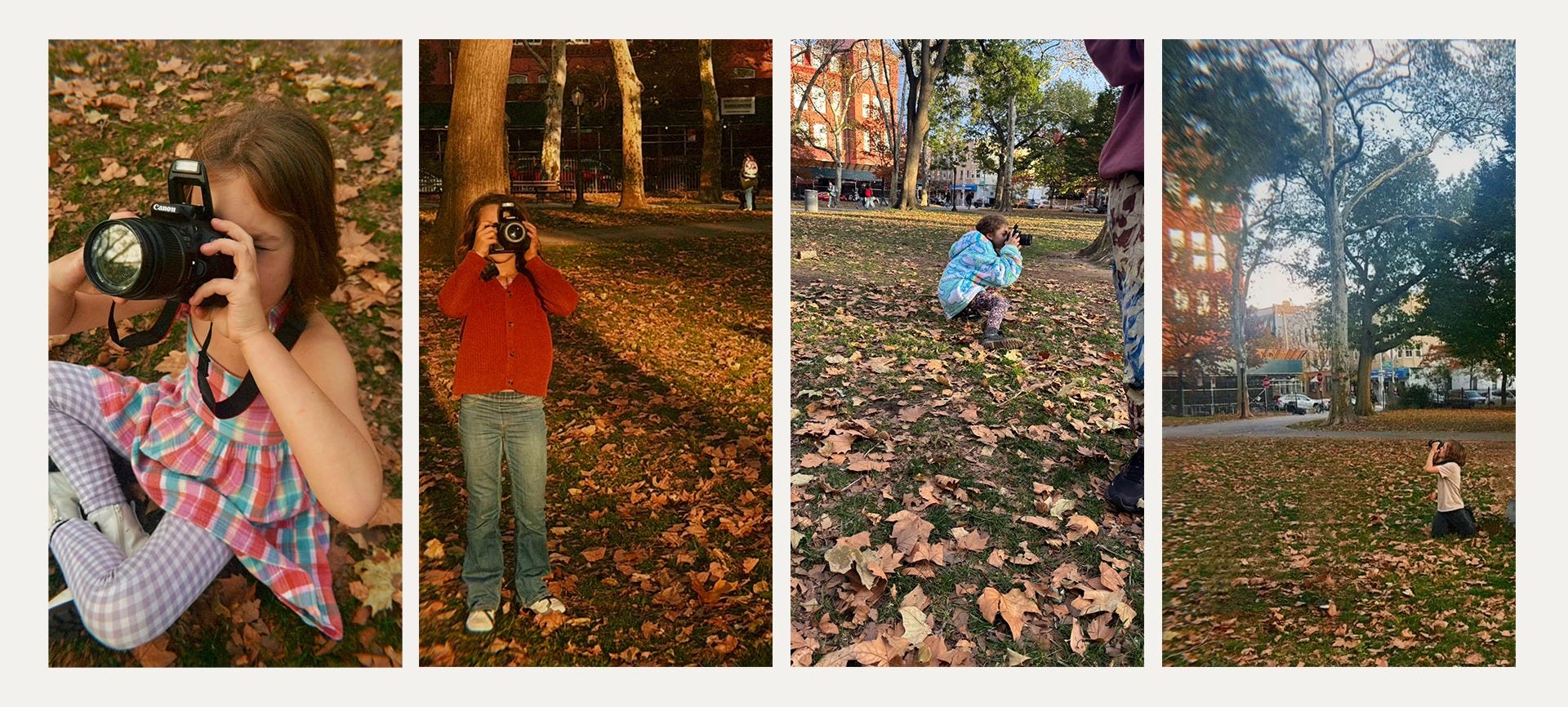
Young artists at PS110 run through McGolrick Park every day. This time, they pause, cameras up, all the way still, eyes on the sky between the branches. The branches are the obvious thing. They are looking past the branches at the sky between them.
What does it actually mean to look at something?
Not glance at it. Not move through it. Look at it - with enough stillness that the thing reveals something it isn’t giving up before.
We live in conditions designed to fragment attention, to move us through places and images and information at a pace that makes real noticing nearly impossible. Slowing all the way down, staying with one thing, looking past the surface - that takes training.
Observation is the first practice. Before any making begins, the first question is: what do you notice? Not what do you think, not what do you know, not what should you see. What do you notice?
We’ve been working with young artists in this park for two years. They know it by heart the way you know the route between two places you go all the time. When you know a place by heart, details can slip past you. The park becomes background.
This time the assignment is to look. They stay with their observation until the branches become a frame. The open sky between the branches - that's negative space. The shape made by what isn't there.

As we leave the park to return to the studio, we talk about all the newly noticed details -the tree bark, the branches, the blue of the sky, the orange golden hour sunlight hitting the trees, the trash on the ground, the brick of their school building.
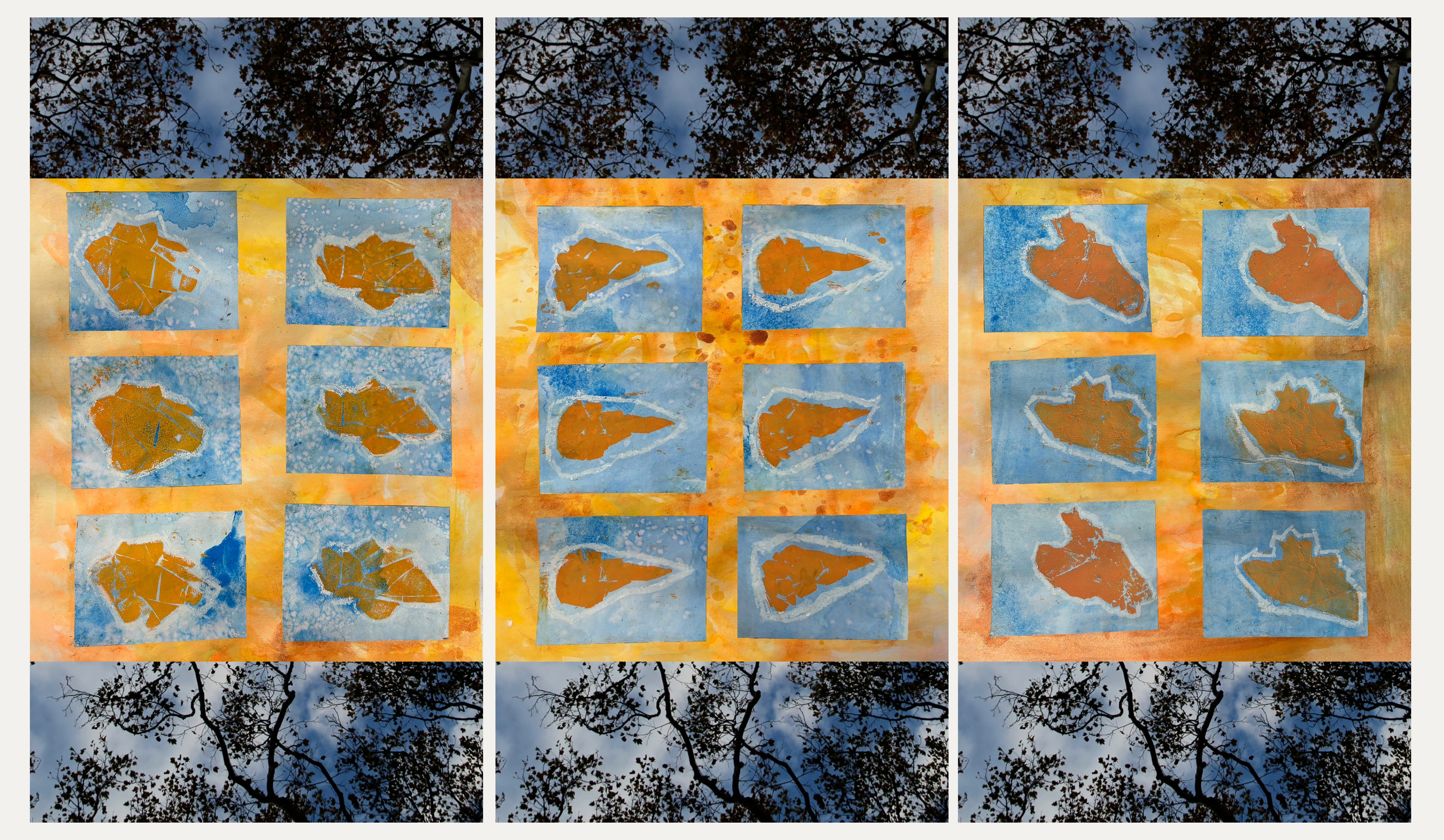
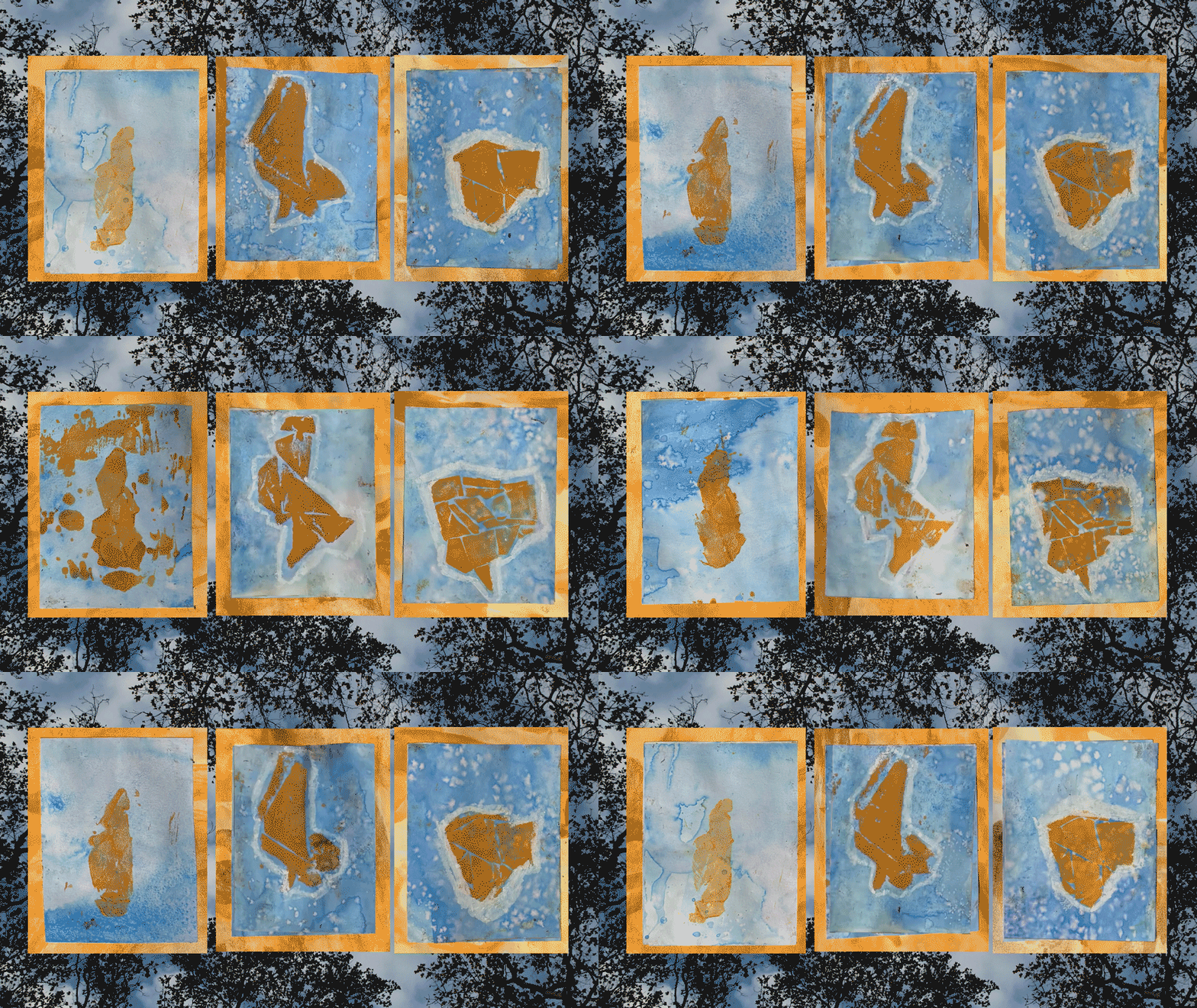
Back in the studio, we focus on the negative space of the trees. Young artists cut the shapes - the exact negative space their cameras found between those specific branches above their heads on that specific day. They roll ink across the foam and press it down. Blue for the sky. Orange for everything the sunlight hit.


This is what the art is for. A print, a mural, a painting - these can be more than objects. Art can be records of what a person noticed, evidence that they were present, proof that they looked.
The prints ask something of the viewer.
The question is what only stillness reveals: 'What do you see when you slow down?
Consider Community Concept: Our ability to find patience takes balance. Our ability to find balance takes patience.
Artist Reference: Benjamin Okantey
Art Vocabulary: Negative space + Shape
Life Vocabulary: Patience + Balance